There’s a part behind your toilet that you’ve probably never looked at — until water pools around the base of the wall and you can’t figure out where it’s coming from.
It’s the supply line. That thin braided hose connecting the shutoff valve on the wall to the bottom of the tank. It carries water into the toilet every single flush. And when it fails, it doesn’t drip politely — it can spray, and it can do real damage to the floor and wall.
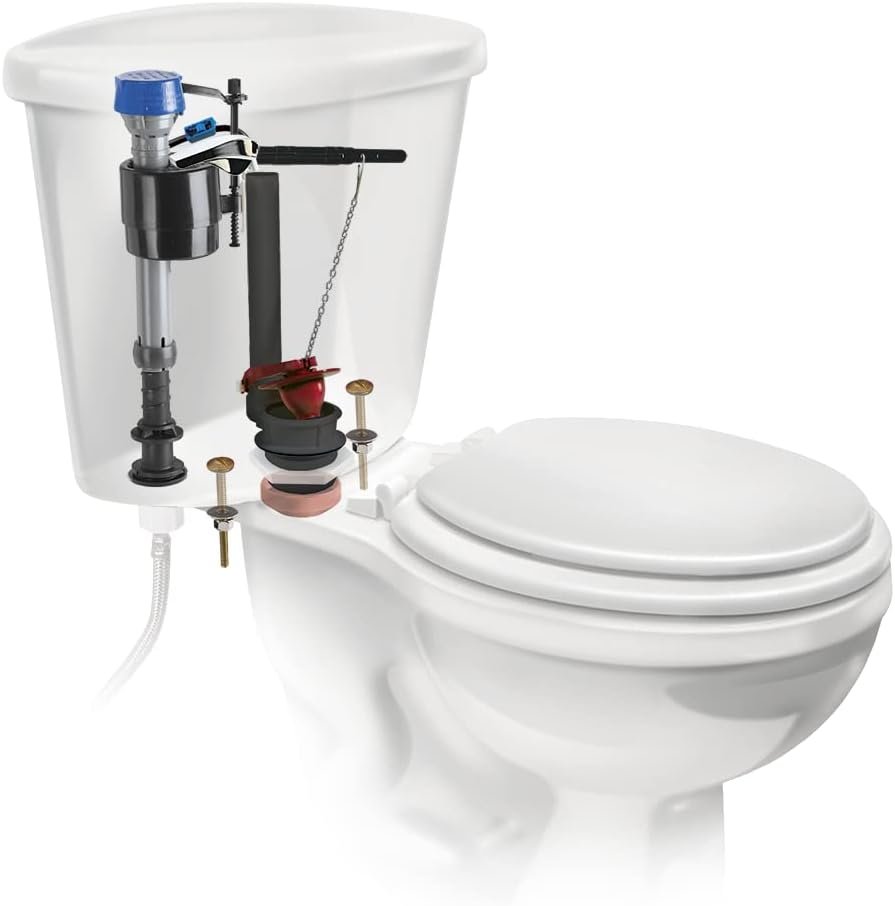
What the supply line does
The supply line is the bridge between your house plumbing and the toilet tank. Water comes through the wall valve, travels up this hose, and fills the tank through the fill valve. It’s under constant pressure — 24 hours a day, every day.
Most modern supply lines are braided stainless steel over a rubber or PVC core. They’re flexible, so the toilet can be installed without perfectly matching pipe positions. But the rubber inside ages, and the fittings at both ends are the weak points.
Why supply lines leak
Age. The rubber core hardens and cracks after 5–10 years. You won’t see it — the crack is inside the braid. The first sign is usually a slow drip that appears under the tank.
Overtightened fittings. The nut at each end has a rubber washer. Crank it too hard and the washer deforms or splits — a leak right at the connection.
The wrong length. A hose that’s too short pulls on the fitting every time the toilet shifts. That strain eventually breaks the seal.
How to spot a failing supply line
- Water or a green stain where the hose meets the tank or the valve
- A musty smell near the toilet with no visible leak
- The hose feels stiff or the braid is fraying
- Rust on the metal fittings
If you see any of these, replace the line now — don’t wait for the full failure. A supply line is one of the cheapest parts on the toilet, and one of the most damaging when it lets go.
What to look for when buying a replacement
Three things matter: the right length (measure the old one), the right connection size (most are 3/8″ compression at the valve and 7/8″ ballcock at the tank), and a braided stainless steel jacket over a quality core. The cheap plastic ones aren’t worth the savings.
Ten minutes and a wrench, and the risk is gone. If you’re buying supply lines for resale or OEM, look for a supplier who pressure-tests every piece — a leaking hose is a warranty claim waiting to happen.
Looking for reliable supply lines and toilet fittings? Sunwell Sanitary manufactures toilet supply hoses, fill valves, flush valves and complete tank fitting kits for export. Contact us for catalog and wholesale pricing.